
Glaucoma Treatment with Acupuncture in Vancouver
Nobody warned you. That is the thing about glaucoma. No pain. No redness. No blurry morning where you squint and think hmm, something feels different. Glaucoma just quietly chews through your vision from the edges in. And by the time you realize pieces are missing? They are gone. You do not get them back. What glaucoma takes, it keeps.
Glaucoma. A disease that damages your eye’s optic nerve. Leading cause of irreversible blindness worldwide. And it absolutely earns its nickname as the silent thief of sight because most people with glaucoma walk around with zero glaucoma symptoms until the vision loss is already permanent. That is not an exaggeration. That is just how glaucoma works.
If you have already been diagnosed with glaucoma, you are probably on drops. Maybe you have had glaucoma laser treatment. Maybe eye surgery. Good. Those matter. But if your glaucoma is still getting worse despite all that, or if you just want to throw everything you have at protecting what is left, acupuncture is a treatment option worth looking into.
At Honor Wellness in Vancouver, glaucoma is one of the conditions we see the most. Andrew Lin has done advanced training in Chinese Medicine Ophthalmology and has worked with glaucoma patients at every stage. Early glaucoma where the pressure just started ticking up. Advanced glaucoma where the field is already narrowing. Cases that did not respond the way anyone hoped to drops or surgery. We have seen the full range.
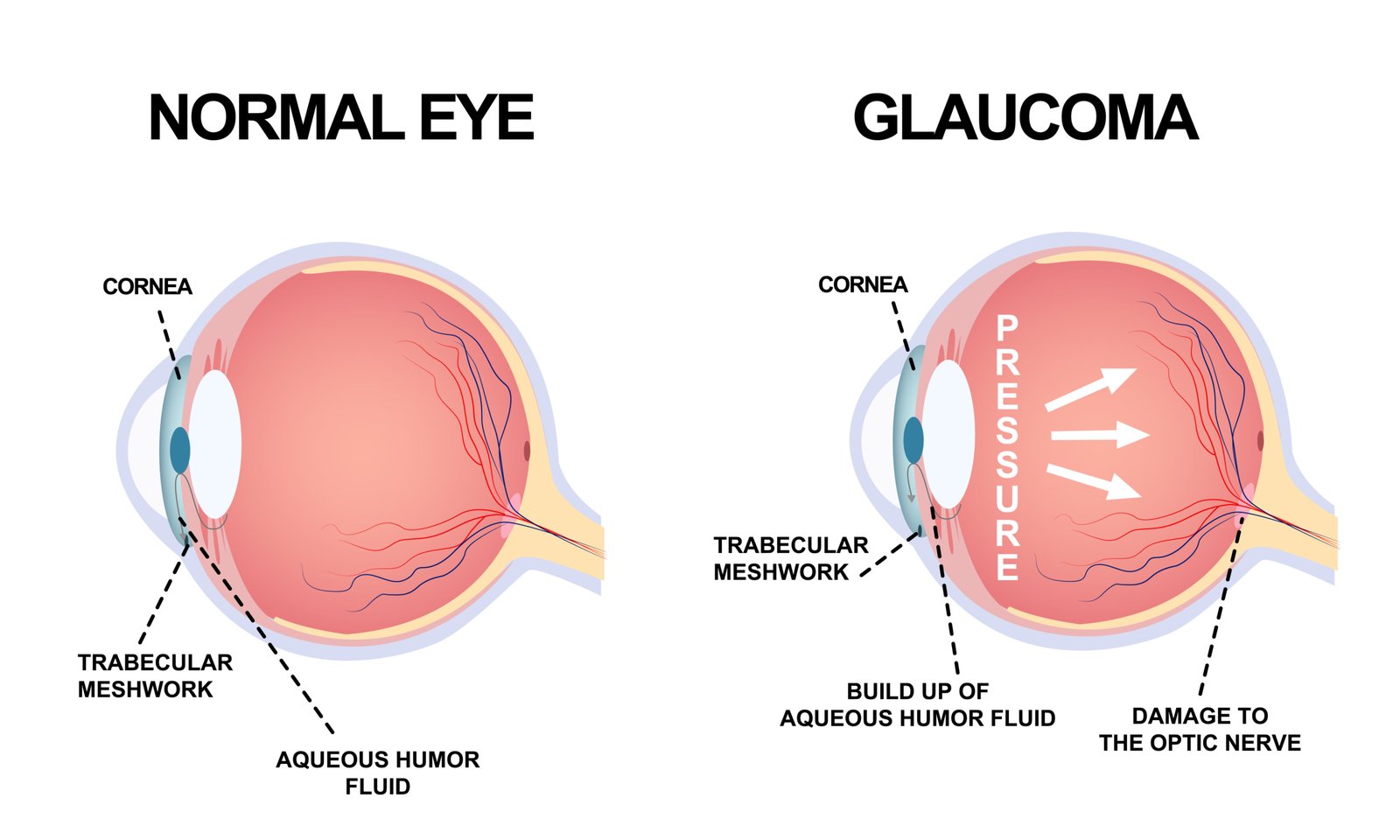
What Is Primary Open-Angle Glaucoma?
Let us talk about what is actually going on inside your eye.
Your eye makes a clear fluid called aqueous humor. It flows through the pupil, feeds the front of the eye, then drains out through a tiny drainage angle where the iris meets the cornea. When everything works, fluid comes in and goes out at the same rate. Pressure stays steady.
Glaucoma occurs when that drainage stops working properly. Fluid backs up. Pressure climbs. That pressure pushes on the optic nerve sitting at the back of the eye. The optic nerve has over a million tiny fibers carrying visual signals to your brain. Damage those fibers and they are done. They do not regenerate. That loss is permanent. Total vision loss.
But here is what your eye doctor probably did not have time to fully explain. Pressure is only part of the problem.
Some people get glaucoma with totally normal eye pressure. The drainage angle is open. Fluid is moving. Pressure looks fine on every test. And yet the optic nerve is still falling apart. That is called normal tension glaucoma, and it proves that something besides pressure is hurting the nerve. Poor blood flow. Inflammation that never turns off. Oxidative stress eating away at the cells. These are body-wide issues that hit the optic nerve hard even when the numbers say everything should be okay.
Meanwhile some people walk around with high eye pressure their whole lives and never develop glaucoma at all. Their nerve just handles it. So pressure clearly matters but it is not the full picture. The nerve’s own health, the blood feeding it, and the body’s ability to deal with inflammation and oxidative damage all determine whether glaucoma gets worse or holds steady.
Treating glaucoma as nothing more than a pressure problem misses a huge piece of what is actually going on.
Open-angle glaucoma is what most people have. With open-angle glaucoma the drainage angle stays physically open but the system inside it gradually gets sluggish. Picture a sink where the drain is not clogged but the water still takes forever to go down. Something in the pipes is not right. Pressure creeps up over months and years. The optic nerve damage builds so slowly you do not feel it. Open-angle glaucoma gives you no warning signs in the early stages, which is why regular eye exams are the only way to catch it before real damage is done.
Angle-Closure Glaucoma and Other Types
Angle-closure glaucoma is a completely different animal. With angle-closure glaucoma the channel slams shut. Fluid has nowhere to go. Pressure rockets up. This is a medical emergency and I am not being dramatic. Sudden eye pain, nausea, headache, rainbow halos around lights? Get to an ER right now. Angle-closure glaucoma can take your vision in hours if that channel does not get reopened.
Childhood glaucoma is rare but it exists. Babies and young children can develop it when the drainage system does not form correctly. It usually needs surgery early.
Who is most at risk for glaucoma? People over 60. People with a family history of glaucoma. Diabetics. People with high blood pressure. People who are severely nearsighted. Anyone on long-term steroids. Anyone with a past eye injury. If any of those risk factors apply to you, get screened. Do not wait for symptoms because with glaucoma there are no symptoms until it is too late. Early glaucoma detection changes everything.
Why Glaucoma Is More Than Just Eye Pressure
The standard approach to glaucoma focuses on getting pressure down. Eyedrops come first. Glaucoma medicines in drop form either slow down how much fluid the eye makes or help the fluid drain faster. If drops are not cutting it, laser procedures create new drainage pathways or open existing ones. If none of that holds, glaucoma surgery builds a brand new exit for the fluid so pressure stays controlled.
These are legit treatment options and we would never tell someone to ditch their drops or skip their ophthalmologist. That is not what we do. But here is what we see over and over. Glaucoma patients come in already doing all of the above. Their eye pressure is managed. Their numbers look decent. And their vision is still declining. Still.
That happens because lowering pressure does not fix everything else that is destroying the optic nerve.
The nerve is starving for blood flow. Not enough oxygen. Not enough nutrients. Chronic inflammation just sitting there grinding away at the tissue day after day. Oxidative stress breaking cells apart faster than the body can rebuild them. These are not eye problems. These are whole-body problems. And the optic nerve is one of the most vulnerable structures when these systems start failing.
How Acupuncture Treats Glaucoma Symptoms
This is exactly where acupuncture fits into glaucoma care.
We are not here to replace your drops or your surgery. We are here to do what drops and surgery cannot. Support the nerve itself. Improve circulation around it. Bring inflammation down. Give the cells a fighting chance against oxidative damage.
No needles go in or near the eyes. Ever. The points are along the eyebrows, temples, and the bone around the eye socket. Other points on the arms and legs tap into the nervous system to push more blood toward the optic nerve, reduce the resistance in the blood vessels feeding it, and calm the inflammatory response that keeps chewing through nerve tissue.
In our clinic glaucoma patients report better visual stability, lower pressure readings when they go back to their eye doctor, and less overall eye discomfort. We do not guess about whether things are working. We track every glaucoma case with visual field tests and pressure data so we can see actual changes.
Glaucoma is not one disease. It is a group of eye diseases that all lead to the same place if nobody intervenes. The nerve breaks down and vision goes dark. But how fast it gets there depends on more than pressure. It depends on blood flow. Inflammation. The nerve’s resilience. And whether someone is actually paying attention to those things or just watching the pressure gauge.
Why Choose Honor Wellness for Glaucoma Care?
We pay attention to all of it. Every glaucoma patient gets a full workup. Your glaucoma type. Your stage. Pressure history. Visual field results. What treatments you have tried. What your glaucoma risk factors look like. No two glaucoma cases play out the same way and your plan has to reflect that.
We talk to your eye doctor. We track glaucoma progress session by session. And we tell you the truth about what acupuncture can do for glaucoma and what it cannot. We do not promise to undo damage. We work to hold the line and protect everything that is still functioning.
If you have glaucoma and you feel like you have done everything right but things keep slipping, acupuncture at Honor Wellness gives you another tool. Another angle. Another real shot at protecting every bit of vision you still have.
Glaucoma never takes a day off. But with the right combination of conventional glaucoma care and acupuncture, you can put up a fight that your glaucoma did not see coming.
It does not matter how old you are or how clean you eat. Glaucoma runs in families and shows up uninvited. If someone close to you has glaucoma, your risk of developing glaucoma jumps. That is not meant to freak you out. It is meant to get you into a chair for a glaucoma screening before this thing introduces itself on its own terms.
We have watched what happens when glaucoma goes ignored. We have also watched what happens when people take their glaucoma seriously and refuse to accept the decline. The difference is real and it is measurable. Glaucoma care at Honor Wellness fills the gap that drops and surgery leave open. And for a lot of glaucoma patients, that gap is exactly where the breakthroughs happen.
Your vision is worth fighting for. Do not go blind waiting around. Book a glaucoma consultation with Honor Wellness today.
Frequently Asked Questions
Is it possible to live with glaucoma without losing your vision?
It is absolutely possible to live with glaucoma without going blind when the condition is detected early and managed consistently. Glaucoma is a chronic condition that requires ongoing monitoring and treatment, but with the right combination of conventional medical care, lifestyle adjustments, and complementary therapies such as acupuncture, many patients successfully preserve their vision for life. Acupuncture supports glaucoma management by improving ocular blood flow, reducing intraocular pressure, and protecting the optic nerve from further damage through regular and consistent treatment.
How rapidly does glaucoma typically progress toward vision loss?
How rapidly glaucoma progresses toward vision loss varies significantly between individuals and depends on the type of glaucoma, intraocular pressure levels, and how consistently the condition is managed. In many cases glaucoma progresses very slowly over years or even decades, particularly when treated early. Without intervention however, the optic nerve damage caused by elevated eye pressure accumulates gradually and irreversibly. Regular monitoring, pressure lowering treatments, and complementary support through acupuncture can significantly slow the rate of progression and help preserve functional vision for as long as possible.
Which form of glaucoma is considered the most dangerous due to its lack of symptoms?
The form of glaucoma considered most dangerous due to its lack of symptoms is primary open angle glaucoma, which is the most common type of the condition. It earns the reputation of a silent killer of vision because it develops gradually and painlessly with no noticeable symptoms in its early stages. By the time most patients become aware of any visual changes, significant and irreversible optic nerve damage has already occurred. This is why regular eye pressure screenings and comprehensive eye examinations are absolutely essential for early detection and timely intervention.
What type of vision is typically affected first in the progression of glaucoma?
The type of vision typically affected first in the progression of glaucoma is peripheral vision, also known as side vision. Because glaucoma damages the optic nerve fibers responsible for detecting light at the edges of the visual field, patients often experience a gradual narrowing of their peripheral vision long before their central vision is affected. This subtle and painless loss of side vision is one of the reasons glaucoma so often goes undetected in its early stages, as most daily activities rely primarily on central vision rather than peripheral awareness.
What activities and habits should be avoided when managing glaucoma?
When managing glaucoma there are several important activities and habits to avoid in order to protect the optic nerve and prevent further elevation of intraocular pressure. Inverted yoga poses, heavy weightlifting, playing wind instruments, wearing tight neckwear, and consuming excessive caffeine have all been associated with temporary increases in eye pressure. Smoking, chronic sleep deprivation, and high levels of unmanaged stress also negatively impact ocular health and should be minimized. Staying consistent with prescribed eye drops, attending regular monitoring appointments, and supporting eye health through acupuncture and proper nutrition are all essential components of responsible long term glaucoma management.