When Muscle Pain Won’t Let Go
That knot in your shoulder that has been there for six months. The low back tightness that no amount of stretching touches. The neck that cracks every time you turn your head but never actually feels better. You have tried massage. You have tried physio. You have tried foam rolling until your eyes watered. And the pain keeps coming back, because nobody has gone after the real problem yet.
This technique goes after the real problem.
IMS, intramuscular stimulation,is not your standard acupuncture. It is a specialized technique that targets muscles that have shortened and locked up because the nerve controlling them is not working right. When a nerve gets irritated or compressed, the muscle it feeds tightens up as a protective response. That tightness does not let go on its own. Stretching does not fix it. Massage pushes on it but the muscle bounces right back. The needle gets inside the muscle, finds the tight band, and releases it at the source. The science behind IMS is straightforward, reset the nerve, release the muscle, restore normal function.
At Honor Wellness in Vancouver, IMS is one of several services we offer as part of your treatment plan. We do not use IMS as a party trick or a standalone gimmick. Your acupuncturist decides when IMS makes sense based on what your body is telling us, and when it does, the results speak for themselves.
Book Your First Visit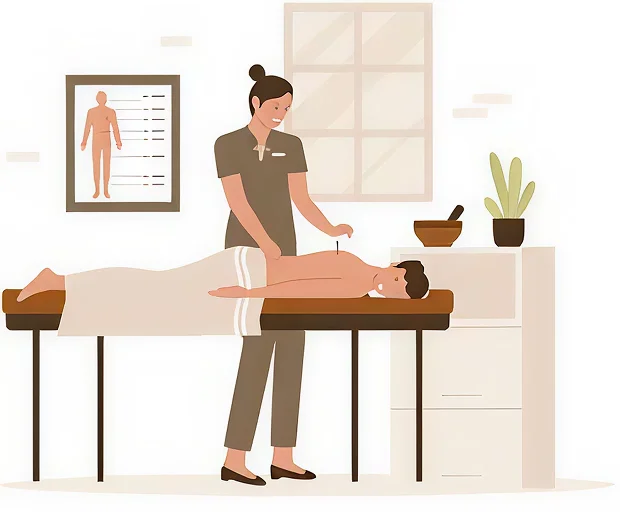
Benefits of IMS
Relieves chronic muscle tension by addressing nerve dysfunction at its source.
So what does IMS actually feel like? Honestly, it is intense for about two seconds and then everything lets go. The needle goes into the tight muscle and the muscle grabs it. You feel a deep cramp, almost like a charley horse, and then the muscle releases. That release is not subtle. You can feel the knot unwinding in real time. Most people describe IMS as the stretch they have been desperately needing but could never reach on their own.
It is not gentle in the way traditional acupuncture is gentle. Traditional acupuncture works on energy flow and systemic balance. It goes straight into the belly of the muscle that is causing the problem. That is why we use acupuncture IMS together in the same session, acupuncture handles the deeper nervous system work while the other handles the local muscle issue. One resets the system, the other releases the lock. Together they cover ground that neither one covers alone.
This technique is most effective for pain that has been hanging around for weeks or months and is not getting better with regular treatment. The kind of pain where your doctor says the imaging looks fine but you are still hurting. That gap between what the scan shows and what you feel? This technique lives in that gap. It treats the muscle dysfunction that does not show up on an MRI but absolutely shows up in your daily life.
Here is what IMS treatment works best for. Chronic low back pain, especially the kind that gets worse after sitting. Your low back muscles shorten from hours in a chair and the treatment releases them directly. Neck pain and headaches that start at the base of your skull. Needling the deep neck muscles can shut those headaches down fast, Sciatica and leg pain from nerve compression, Needling along the path of the irritated nerve takes pressure off and restores mobility. Tennis elbow, golfer elbow, and repetitive strain, The technique targets the forearm muscles that have been overworked and locked up. Shoulder impingement and rotator cuff tightness, The needle reaches the deep rotator cuff muscles that massage cannot get to. IT band syndrome and hip pain, Treating the glutes and hip flexors is often the missing piece. Jaw tension and TMJ, Treating the jaw muscles offers relief that nothing else quite matches.
IMS at Honor Wellness
The institute where IMS was developed, by Dr. Chan Gunn at the University of British Columbia, built the technique specifically for chronic pain that was not responding to conventional treatment. The research behind it has been validated in clinical settings and it is now used by practitioners across Canada and around the world. It is not experimental. It is not fringe. It is an established, evidence-based approach that fills a gap most other treatments miss.
Your first IMS session at our clinic starts with a full assessment. We check your movement, your pain patterns, your posture, and your nerve responses. If IMS is the right fit, we get started on the same visit. Most people notice real improvement within three to four sessions, less pain, more range of motion, muscles that actually stay loose between visits instead of locking right back up.
The treatment is not a forever commitment. We track your progress, set clear milestones, and work toward getting you to a place where your body holds the changes on its own. Some people need four sessions. Some need eight. It depends on how long the problem has been building and how many layers of compensation your body has stacked up. But the goal with IMS is always the same, fix it and move on.
What to Expect
We offer IMS alongside our full range of acupuncture services, including electroacupuncture, cupping, gua sha, and red light therapy. Your IMS therapy plan is built around what your body needs, not a cookie-cutter protocol. If IMS is the right tool, we use it. If IMS is not the right fit, we go with whatever serves you better.
Why Choose Honor Wellness Studio?
No two people heal the same way, so no two treatment plans should look alike either. We go further than most clinics by reviewing your lab work, scans, and imaging so your treatment is informed by the full picture from day one. With over 25 years of combined clinical experience, our team knows how to get results, and this technique is one of the most powerful tools in our kit.
We are open seven days a week with same-day appointments, and we bill your insurance directly, including ICBC and extended health through Pacific Blue Cross, Manulife, Sun Life, and Great-West Life.
If you have been living with muscle pain that nobody can seem to fix, the kind that keeps showing up no matter what you do, IMS at Honor Wellness might be exactly what has been missing.
Book Your First VisitFrequently Asked Questions
Is the IMS treatment process painful?
The IMS treatment process can feel more intense than traditional acupuncture but is generally well tolerated by most patients. When the needle is inserted into a tight or shortened muscle, you may feel a brief cramping or grabbing sensation, which is actually a sign that the muscle is responding to treatment. This discomfort is temporary and typically fades within seconds, leaving the muscle feeling noticeably more relaxed and released afterward.
What are the commonly reported side effects following IMS needling?
The commonly reported side effects following IMS needling include temporary muscle soreness, mild bruising, and localized tenderness in the treated area. These reactions are completely normal and are a sign that the muscles are responding and beginning to heal. Most side effects resolve within 24 to 48 hours. Applying gentle heat to the area, staying hydrated, and avoiding strenuous activity immediately after your session can help ease any post treatment discomfort.
What does IMS needling do to the muscles and tissue?
IMS needling works by inserting fine needles directly into tight, shortened muscles that are contributing to chronic pain and dysfunction. The needle causes the muscle to contract and then release, resetting the nerve endings and restoring normal muscle length and function. This process reduces pressure on surrounding nerves, improves circulation to the affected tissue, and triggers the body's natural healing response, resulting in lasting pain relief and improved mobility over time.
What types of injuries and conditions respond best to IMS treatment?
The types of injuries and conditions that respond best to IMS treatment include chronic neck and back pain, tennis elbow, rotator cuff injuries, sciatica, shin splints, and persistent muscle tightness that has not responded to other forms of treatment. IMS is particularly effective for neuropathic pain, which is pain caused by nerve irritation or supersensitivity in the muscles. Patients who have struggled with long standing pain often find IMS to be a turning point in their recovery journey.
Is the IMS treatment process painful?
The IMS treatment process can feel more intense than traditional acupuncture but is generally well tolerated by most patients. When the needle is inserted into a tight or shortened muscle, you may feel a brief cramping or grabbing sensation, which is actually a sign that the muscle is responding to treatment. This discomfort is temporary and typically fades within seconds, leaving the muscle feeling noticeably more relaxed and released afterward.
What are the commonly reported side effects following IMS needling?
The commonly reported side effects following IMS needling include temporary muscle soreness, mild bruising, and localized tenderness in the treated area. These reactions are completely normal and are a sign that the muscles are responding and beginning to heal. Most side effects resolve within 24 to 48 hours. Applying gentle heat to the area, staying hydrated, and avoiding strenuous activity immediately after your session can help ease any post treatment discomfort.
What does IMS needling do to the muscles and tissue?
IMS needling works by inserting fine needles directly into tight, shortened muscles that are contributing to chronic pain and dysfunction. The needle causes the muscle to contract and then release, resetting the nerve endings and restoring normal muscle length and function. This process reduces pressure on surrounding nerves, improves circulation to the affected tissue, and triggers the body's natural healing response, resulting in lasting pain relief and improved mobility over time.
What types of injuries and conditions respond best to IMS treatment?
The types of injuries and conditions that respond best to IMS treatment include chronic neck and back pain, tennis elbow, rotator cuff injuries, sciatica, shin splints, and persistent muscle tightness that has not responded to other forms of treatment. IMS is particularly effective for neuropathic pain, which is pain caused by nerve irritation or supersensitivity in the muscles. Patients who have struggled with long standing pain often find IMS to be a turning point in their recovery journey.